Back Alley Font: Raw Urban Charm for Handmade Labels & Signs
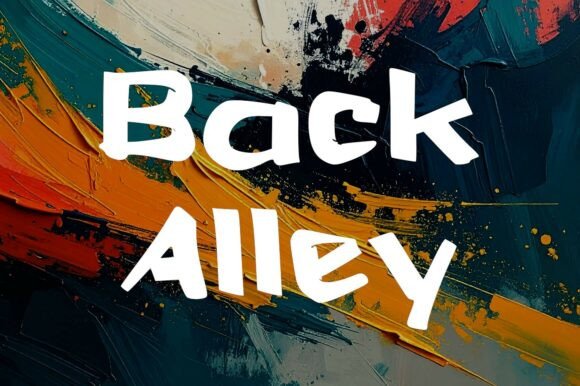
If you’ve ever held a hand-stamped candle label, traced a chalkboard-style welcome sign, or designed a sticker with that unmistakable “lived-in” edge—you know the power of texture in type. That’s exactly where Back Alley steps in: a display font built not for perfection, but for presence. It’s rough around the edges—literally—with irregular baselines, uneven stroke weights, and a tactile, handmade feel that reads like sidewalk chalk meets vintage screen print.
This isn’t a font you’ll use for ingredient lists or multi-paragraph product descriptions. Back Alley is your go-to for moments that need attitude, authenticity, and instant visual grounding—especially when your customer is scrolling past dozens of polished, generic designs. As a maker who prints tags on kraft paper, cuts vinyl for mugs, and builds digital templates for fellow small-business owners, I reach for Back Alley when I want something to feel *real*, not rendered.
Where Back Alley Shines in Physical & Digital Craft Projects
Labels & Packaging: Candle makers, soap sellers, and small-batch food producers love how Back Alley adds grit without sacrificing legibility at 14–18 pt. Try it for brand names (“Hearth & Co.”), scent titles (“Smoke & Cedar”), or short descriptors (“Small Batch • Hand-Poured”) on matte sticker stock or kraft labels. Its uneven strokes actually soften under print—no harsh pixelation, no sterile uniformity.
Stickers & Vinyl Cuts: Yes, it cuts cleanly on Cricut and Silhouette machines—just avoid scaling below 0.25" height. The irregular baseline adds character to bumper stickers, laptop decals, and shop window graphics. For best results, use the bold weight (if included) and avoid tight kerning on curved surfaces like tumblers.
Invitations & Wedding Stationery: Don’t assume “rough” means “unrefined.” Paired with a delicate script or soft serif, Back Alley brings grounded warmth to rustic weddings—think “Welcome to the Back Alley Barn” on a wooden welcome board or “Bar + Bites” on cocktail napkins. It holds up beautifully in letterpress, foil stamping, and laser-cut wood signs.
Digital Printables & Planner Pages: Use Back Alley for section headers (“Market Day”, “Weekend Goals”, “Shop Local”), quote art, or decorative dividers. Its texture adds dimension even in flat PDFs—and because it’s a display font, it won’t compete with body text in editable Canva or PowerPoint templates.
Seasonal & Boutique Designs: Halloween tags, holiday market banners, farmer’s market tote bags, and indie bookstore posters all benefit from its urban honesty. I used Back Alley for a “Ghost Town Bakery” seasonal mug series—and customers specifically mentioned how the font made the design feel “like it belonged on a brick wall, not a screen.”
Readability, Sizing & Production Tips You’ll Actually Use
Keep it short. Back Alley works best for 1–5 words per line: names, titles, slogans, or single evocative nouns (“Grit”, “Found”, “Pressed”). Avoid full sentences or dense paragraphs—it’s a display font, not a workhorse text face.
Size matters. For printed cards and tags, aim for 16–24 pt minimum. On vinyl cuts, stay above 0.3" tall for crisp edges. In mockups, preview at 100% zoom—not just thumbnail view—to catch subtle spacing quirks.
Check your file package. Before purchasing, verify whether Back Alley includes OpenType features like stylistic alternates or ligatures. Some versions offer “grit-only” and “cleaner distressed” variants—useful for A/B testing packaging or matching different product lines.
Smart Font Pairings That Elevate Your Brand
With a clean sans serif: Pair Back Alley (for headlines) with Montserrat, Inter, or Poppins (for body text or pricing). This combo delivers contrast without chaos—ideal for Etsy shop banners, product cards, or digital download instructions.
With a warm serif: Try pairing with Playfair Display or Cormorant Garamond. The elegance of the serif tempers Back Alley’s rawness—perfect for apothecary labels, boutique gift tags, or wedding menus.
With a relaxed script: A light, bouncy script like Pacifico or Qwigley balances Back Alley’s angular energy. Great for greeting cards (“You’re Invited…”) or artisanal food packaging (“Hand-Mixed • Small-Batch”).
Licensing & Commercial Use: What You Need to Know
Back Alley is a commercial font—but not all licenses are equal. If you’re selling physical products (mugs, shirts, stickers), creating digital downloads (SVG files, Canva templates, printable planners), or designing for clients, confirm the license explicitly permits *commercial redistribution*. Look for terms covering “end-user resale,” “digital goods,” and “physical merchandise.” Most reputable display fonts—including quality releases like Back Alley—offer extended licenses for these uses. Never assume “personal use only” covers your Etsy shop.
Also check multilingual support if you serve bilingual markets or plan international listings. While many display fonts focus on Latin characters, some include extended diacritics—handy for café names, botanical labels (“Lavandula”), or bilingual wedding signage.
At the end of the day, Back Alley isn’t about trend-chasing. It’s about giving your handmade goods a voice that feels human—slightly imperfect, deeply intentional, and unmistakably yours. Whether it’s stamped on a tea towel, cut into birch plywood, or layered into a digital planner cover, this font doesn’t shout. It leans in, rolls up its sleeves, and says, “Let’s make something real.”