Casual Canary: A Friendly Display Font for Handmade Labels & Printables
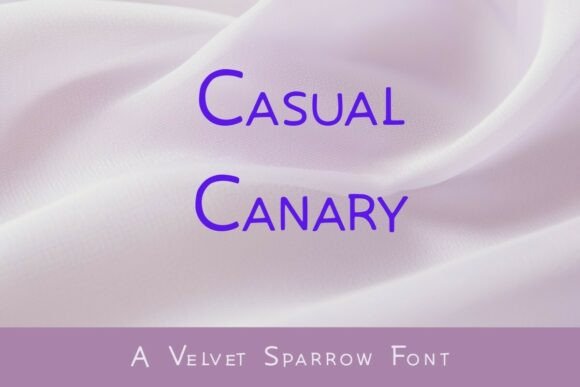
It started with a candle label—just one small 2.5-inch oval, printed on kraft sticker paper, meant for a lavender-vanilla soy blend I’d poured that morning. I opened my design file, scrolled past the bold display fonts and tight scripts, and landed on Casual Canary. Instantly, something clicked. Its smooth, unhurried strokes felt like a quiet exhale—light but present, relaxed but intentional. No sharp angles, no forced flair—just gentle curves, open letterforms, and breathing room between each character. It wasn’t shouting. It was smiling.
Casual Canary is a display font built for makers who value warmth over wow, clarity over clutter. As a light, relaxed lettering style, it’s designed to stand out—not with volume, but with approachability. Think of it as the handwritten note you tuck into a gift box: legible at a glance, full of personality, never stiff. Its simple forms hold up beautifully at small sizes—on 1-inch boutique tags, 1.5-inch sticker sheets, or even tiny jar labels—and scale gracefully for larger applications like farmhouse-style wall art or wedding welcome boards.
I’ve used Casual Canary across real production workflows: printing matte-finish greeting cards for birthdays and baby showers, cutting vinyl for ceramic mug decals, laying out digital planner pages in Canva, and prepping seasonal SVG files for Cricut users. Every time, it delivers consistent readability—no dropped counters, no cramped spacing, no awkward kerning traps. That’s especially helpful when designing for cutting machines: the rounded terminals and generous x-height mean clean cuts, even at 0.25 inches tall. On physical products like cotton tote bags or linen tea towels, it holds its shape through screen printing and embroidery digitizing—no fragile serifs or delicate swashes to break apart.
Because it’s a display font—not a text face—Casual Canary shines best in short, impactful roles: product names (“Honey Lavender Candle”), taglines (“Hand-poured • Small Batch • Made Here”), titles on printable wall art (“Good Things Grow Here”), or names on wedding invitations. It’s not intended for body copy or long paragraphs, and that’s part of its charm. It invites focus. When paired with a clean sans serif like Montserrat or Inter for supporting text—or a soft serif like Playfair Display for contrast—it creates visual hierarchy without competing. For layered designs (say, a holiday sticker sheet with both script and blocky elements), Casual Canary adds rhythm and warmth without overwhelming.
One afternoon, I tested it across five real-use cases: a set of printable planner stickers, a batch of bakery packaging tags, a digital download preview image for an Etsy listing, a chalkboard-style sign for a local craft fair booth, and a trio of fabric-printed tea towel designs. In every case, Casual Canary performed quietly but confidently. On the tea towels, its open letterforms translated well to fabric texture—no bleeding, no muddiness. In the digital preview, it rendered crisply on retina screens and looked equally friendly in thumbnail size. And on the craft fair sign? Customers paused longer. Not because it was flashy—but because it felt human.
What makes Casual Canary especially useful for commercial crafters is how thoughtfully it’s built. Before finalizing any design for sale—whether it’s a printable template, SVG cut file, or physical product—I always check what’s included: multiple weights (though it’s primarily a single-weight display face), standard OpenType features like ligatures and stylistic alternates, and clear commercial licensing. I also verify multilingual support if I’m designing for bilingual markets—like English/Spanish holiday tags or French/English wedding stationery. The file formats matter too: OTF and TTF work seamlessly in Silhouette Studio, Cricut Design Space, Adobe apps, and free tools like Photopea. No surprises at export.
For packaging, it brings cohesion without rigidity. On kraft boxes, recycled paper tags, or frosted glass jars, Casual Canary feels grounded—not trendy, not dated, just right. It pairs naturally with earthy tones, creamy whites, and muted pastels, but also holds its own against bolder palettes like navy and terracotta. On digital downloads—think editable Canva templates, Notion planners, or Procreate brush sets—the font lends a handmade authenticity that customers recognize and trust. It signals care, not automation.
Readability is where Casual Canary truly earns its place in my font library. Unlike some decorative scripts that blur at small sizes or lose character on low-res prints, this font stays crisp and friendly—even on thermal receipt paper or budget sticker stock. I’ve used it successfully for:
- 3/4-inch round soap labels (cut cleanly on my Cricut Maker)
- Digital greeting card mockups (sharp on Instagram and Pinterest thumbnails)
- Wedding welcome board lettering (hand-painted from a printed guide, thanks to its clear stroke flow)
- Seasonal printable bundles (Halloween “Boo!” tags, Easter “Hop Along” banners, Christmas “Joy” ornaments)
- Boutique clothing tags (embroidered name + Casual Canary brand line)
If you’re choosing fonts for your shop’s identity—not just a one-off design—you’ll appreciate how Casual Canary supports consistency across touchpoints. A candle label using it feels like the same voice as your Instagram story highlight icon, your printable shower invitation, or the “Thank You” card tucked into a package. That continuity builds recognition—not with repetition, but with tone. It says, “This is made by someone who pays attention to how things feel, not just how they look.”
Before adding Casual Canary to your next project, take five minutes to test it in context: type your most-used phrase at three sizes (8pt, 24pt, 72pt), preview it on your intended medium (sticker paper, fabric, screen), and compare it beside your current go-to font. Notice where it breathes—and where it draws the eye. You might find, like I did with that first lavender-vanilla label, that the right display font doesn’t just finish a design. It welcomes people in.